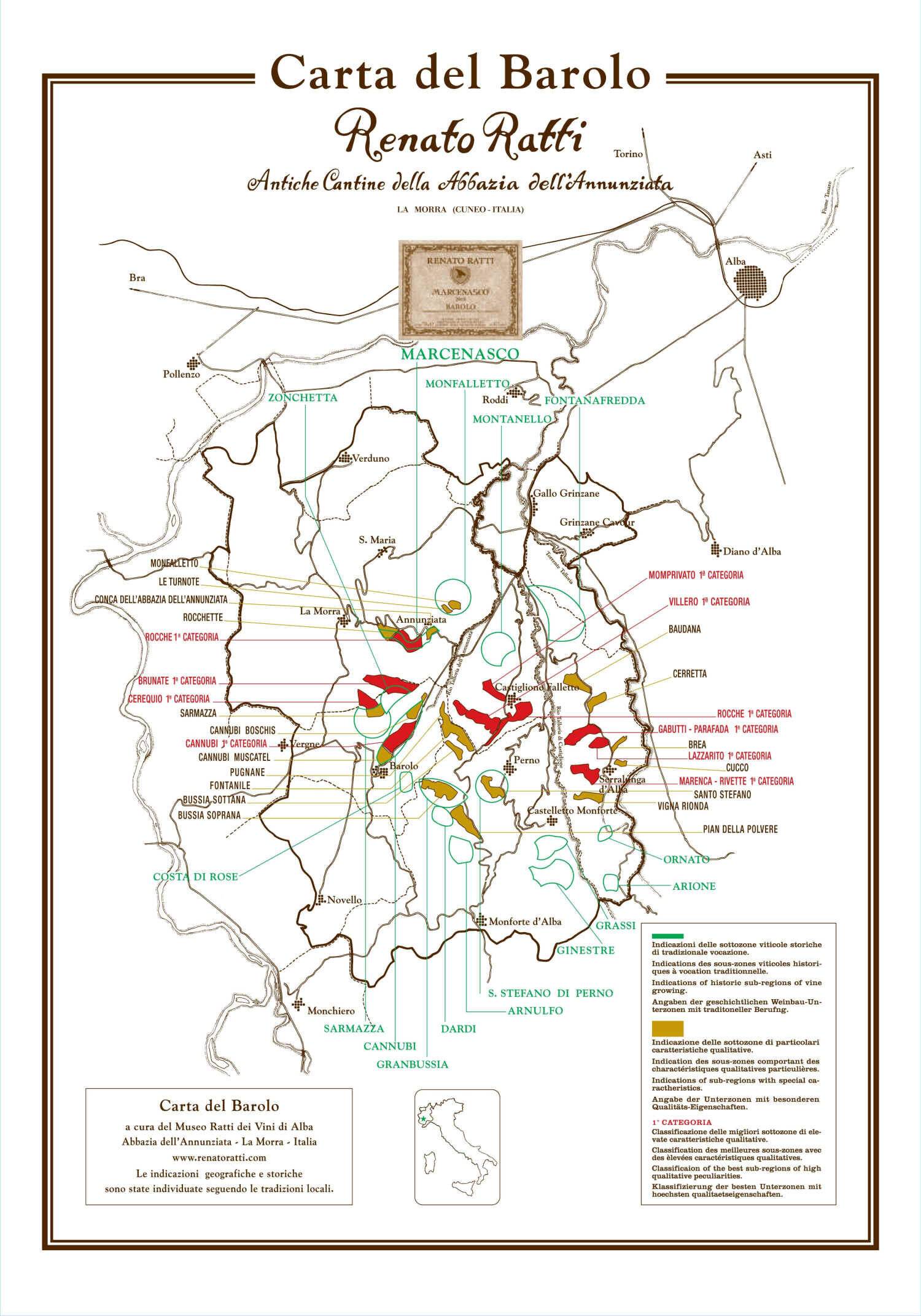


This article explores how ancient seas shaped the soils of the Langhe and how these geological formations, together with Renato Ratti’s pioneering vineyard map, influence the style and structure of Barolo today.
Understanding Langhe Soils in the Barolo Area
From the Padano Sea to the Langhe Hills
Let’s start from the beginning! Around 24 million of years ago there was the Padano sea. This sea covered basically all of Italy. When the sea receded over the course of million of years it left the Alps and the beautiful UNESCO landscape of Langhe. These hills depending of where they are located, have different soil structures dependent on the formation, the age and the other geological activities.
This can be broken down in three main categories: the Messinian, the Tortonian and the Serravallian.
Messinian formation
What does this all mean?
Well, the Messinian formation is categorized by marine sedimentary layers containing gypsum, sandstones, and marls.
What does this do for the wine? It softens the tannins, enhances the aromatic bouquet, and makes the wine easier to drink.
Tortonian formation
The Tortonian formation is categorized by marine sediments, primarily the Sant'Agata Fossili Marls, which consist of blue-grey marls rich in clay, silt, and a moderate amount of sand and limestone.
What does this do for the wine? Here we have the most amount of balance in the Barolo area. Here we have wines of great age ability, good structure, smooth tannins, with typical flavors of dried rose petals, tar, red fruits and licorice.
Serravallian formation
The Serravallian formation is categorized by layers containing clay-limestone marl, sandstone, and sand.
What does this do for the wine?
When we talk about body builders, we talk about wines coming from this area. The most powerful and structured, darker and brooding fruits with menthol, savory herbs and dried orange peels. These wines are meant to age.
Renato Ratti and the Mapping of Barolo MGAs
Renato Ratti was a very important visionary in the Langhe area writing a thesis in the 1970’s mapping out possibly Barolo and Barbaresco most important vineyards. This today is of discussion, as he outlined most vineyards southern facing. While today they are still beautiful positions but with climate change this locations are subject to tougher times.
The MGA’s that Renato Ratti has highlighted are as follows_
“Grand Cru” Status MGAs
Monprivato - Tortoniano Marne di S. Agata Fossili sabbiose
Villero - Tortoniano Marne di S. Agata Fossili sabbiose & Tortoniano Marne di S. Agata Fossili tipiche
Rocche di Castiglione - Tortoniano Marne di S. Agata Fossili sabbiose & Tortoniano Arenarie di Diano
Gabbutti-Parafada - Serravalliano Formazione di Lequio
Lazzarito - Serravalliano Formazione di Lequio
Marenca-Rivette - Serravalliano Formazione di Lequio
Cannubi - Tortoniano Marne di S. Agata Fossili sabbiose & Tortoniano Marne di S. Agata Fossili tipiche & Tortoniano Arenarie di Diano
Cerequio - Tortoniano Marne di S. Agata Fossili tipiche & Tortoniano Marne di S. Agata Fossili laminate
Brunate - Tortoniano Marne di S. Agata Fossili tipiche & Tortoniano Marne di S. Agata Fossili laminate
Rocche di Annunziata - Tortoniano Marne di S. Agata Fossili laminate & Tortoniano Marne di S. Agata Fossili sabbiose & Tortoniano Marne di S. Agata Fossili tipiche
Other Notable MGAs Highlighted by Ratti
The other MGA’s he had highlighted for great quality and position are:
Baudana - Tortoniano Marne di S. Agata Fossili tipiche & Serravalliano Formazione di Lequio
Cerretta - Serravalliano Formazione di Lequio & Tortoniano Marne di S. Agata Fossili tipiche
Brea - Serravalliano Formazione di Lequio
Santo Stefano di Perno - Tortoniano Arenarie di Diano & Serravalliano Formazione di Lequio & Tortoniano Marne di S. Agata Fossili sabbiose
Vigna Rionda - Serravalliano Formazione di Lequio
Bussia Soprana - Tortoniano Marne di S. Agata Fossili sabbiose & Tortoniano Arenarie di Diano & Tortoniano Marne di S. Agata Fossili tipiche
Bussia Sottana - Tortoniano Marne di S. Agata Fossili sabbiose & Tortoniano Arenarie di Diano & Tortoniano Marne di S. Agata Fossili tipiche
Pugnane - Tortoniano Marne di S. Agata Fossili tipiche
Cannubi - Tortoniano Marne di S. Agata Fossili sabbiose & Tortoniano Marne di S. Agata Fossili tipiche & Tortoniano Arenarie di Diano
Cannubi Muscatel - Tortoniano Marne di S. Agata Fossili sabbiose
Cannubi Boschis - Tortoniano Marne di S. Agata Fossili tipiche
Sarmassa - Tortoniano Marne di S. Agata Fossili tipiche & Tortoniano Marne di S. Agata Fossili laminate
Conca dell’Abbazia dell’Annunziata - Tortoniano Marne di S. Agata Fossili tipiche
Cannubi and its conflicts (Boschis, Cannubi, Valletta, San Lorenzo and Muscatel)
I feel like I’m bringing back something from the dead here, but over the course of a decade, a very historic vineyard in the heart of Barolo underwent a name change. We had five separate vineyards, each with distinct soil structures and exposures, all located in the heart of the Barolo wine region. Historically, each name carried its own significance, but due to marketing conflicts, the historic and treasured name of Cannubi was expanded. The original Cannubi vineyard covers 14 hectares; today, after the expansion, it spans 37 hectares—almost three times its original size.
But why is Cannubi so important? Cannubi was the first vineyard ever to be mentioned on a wine label, back in 1752—more than a century before Barolo wine was even born! This recognition already signaled exceptional quality and an ideal position for ripening Nebbiolo grapes.