

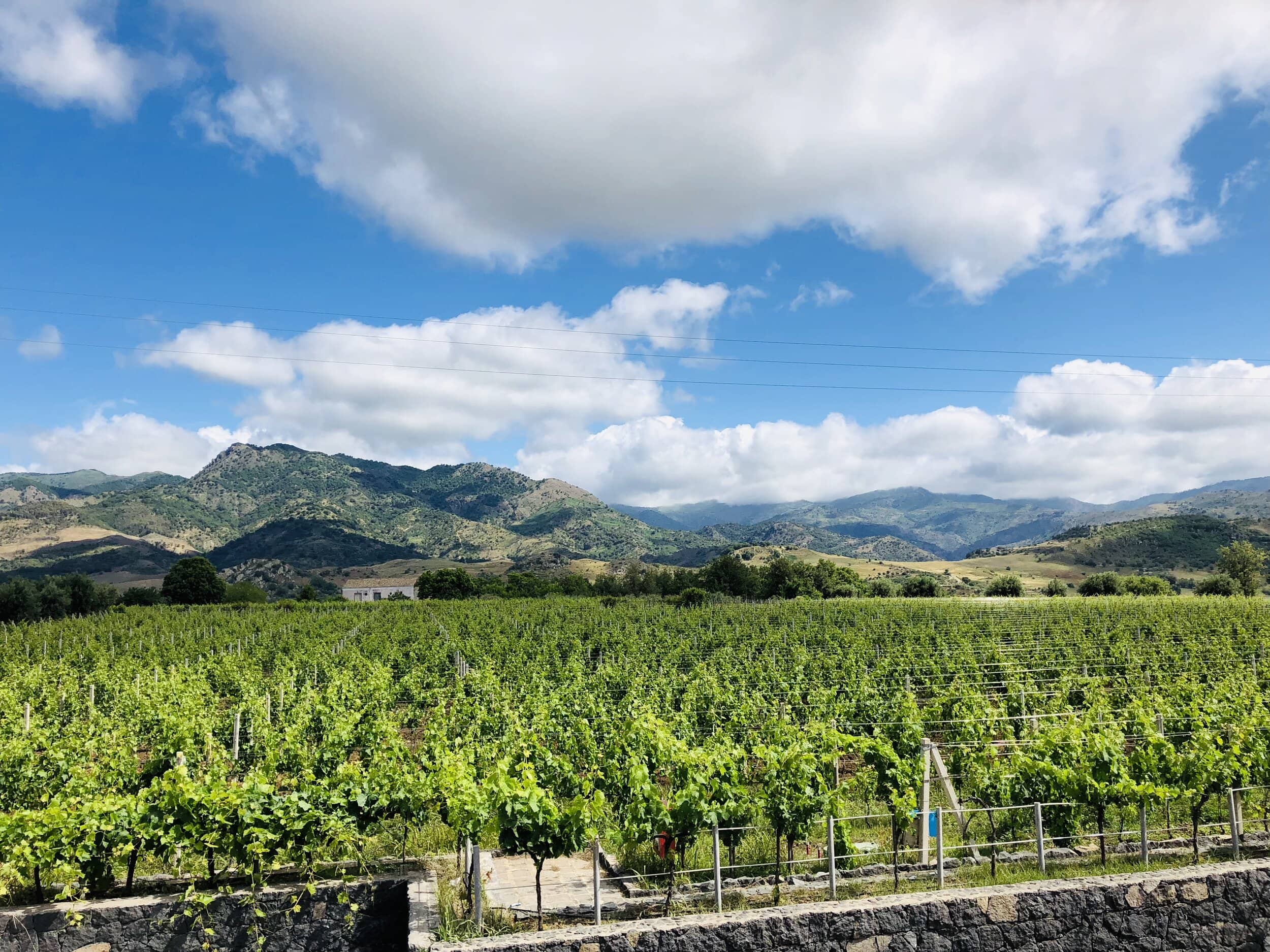
If you are planning a wine trip to Sicily, the Etna volcano wine region is one of the most unique areas you can visit. Below you’ll find practical information on how to get there, how to move around, the main local grapes and the most important wine towns to explore.
How to get to Etna volcano wine region
The nearest airport is Catania airport – with a 45 minute drive you can be in the mount Etna wine country area. To drive from the north versante nord of the area to the south versante sud can take about one hour by car, as there are many windy backroads and only one highway that travels from Taormina to Catania, the A18.
Before we get started on the important wine tasting information, one thing to keep in mind when visiting the Mount Etna wine region is that transportation in this area is not very easy. If going wine tasting on Etna volcano, you should know that the wineries themselves are not close to one another and a car or driver is highly recommended. Navigation is not always easy in the Sicilian wine regions, and a driver or guide in the area is suggested. It can certainly be done on your own—just leave extra time to get lost and remember that drinking and driving can be dangerous.
One more thing to keep in mind when visiting the Etna volcano wine country is that appointments are mandatory to visit the wineries and to meet the producers. The cellar doors are not open to the public and each winery asks a tasting fee. On the flip side, almost every visit will have plentiful amounts of wines to taste as well as many typical food products to pair with the wines.
Major Etna wine region grape varieties
- Nerello Mascalese: locally called Niureddu, Nerello Mascalese is the most dominant varietal in the Etna Rosso category. Its origins come from the town of Mascali. One reason this wine grape is so highly regarded is the abundance of pre-phylloxera vines found on the volcanic slopes of mount Etna. When blended with Nerello Cappuccio, typical in Etna Rosso IGT and DOC, the two grapes complement each other: Nerello Mascalese is low in color and high in tannin, while Nerello Cappuccio is rich in color and low in tannin, providing balance.
- Nerello Cappuccio: the name comes from the appearance of the grape. Cappuccio (“hood” or “cap” in Italian) refers to the canopy that resembles a cap covering the bunches. While commonly blended with Nerello Mascalese, there are a few examples of wines made with this varietal alone.
Fun fact — The Etna denomination DOC requires 80% Nerello Mascalese and 20% Nerello Cappuccio.
- Carricante: from the Italian word caricare (“to load up”), this grape produces enormous yields when left unmanaged—enough to load a cart or donkey. Despite its vigor, Carricante is known for producing some of Etna’s most complex white wines: mineral-rich, high in acidity, and long-lived.
Fun fact — Where nothing else grows, Carricante thrives. This variety is planted on the highest slopes of mount Etna or in valleys with the poorest soils. The more the grapes struggle, the better the wines. ;)
Other mount Etna wine grapes
-
Minnella Bianca (Minnella Nera): Minnella Bianca is now a rare variety grown almost exclusively on the slopes of mount Etna. The name comes from the Italian minna (“female breast”) because of the shape of the berries. It is a low-acid variety typically used for blending, although some solo vinifications have produced pleasing results.
Important wine growing municipalities
1. Castiglione Sicilia
Where to wine taste: Monteleone winery in Castiglione di Sicilia
What to do: Dinner at Vitis Vineria
2. Randazzo
Where to wine taste: La Calabretta
What to do: Aperitivo at Il Buongustaio Pippo, lots of food, wine, and fun!
3. Zafferana Etna
Where to wine taste: Guido Coffa
What to do: Stay at Monaci delle Terre Nere in one of their restored ancient Palmento
4. Linguaglossa
Where to wine taste: Vivera
What to do: Taste the typical Sicilian cookies at Pasticceria L’Alhambra
5. Milo
Where to wine taste: I Vigneri di Salvo Foti
What to do: Grab a bite at Quattro Archi Osteria Pizzeria
Where to taste Etna wines by the glass
There are a few places that have the expertise, wines, and passion to walk you through an in-depth wine tasting, discussing contrada, altitude, exposure, and winemaking process.
-
Enoteca Buongustaio: You will be greeted by Pippo and his children, who will take you on a wine-and-food-filled journey without even leaving your seat. They offer a wide selection of Etna producers, from small artisanal wineries to renowned estates.
-
Vitis Vineria Bottega: Reservations are essential—there are only four tables. If you manage to get one, save room for plenty of wine and order the charcuterie board.


